The 99% Purity Trap: What Peptide Buyers Miss Before Ordering
A sharper, click-friendly guide explaining why a 99% peptide purity claim can still be incomplete without lot-specific COA, HPLC and mass spec context.
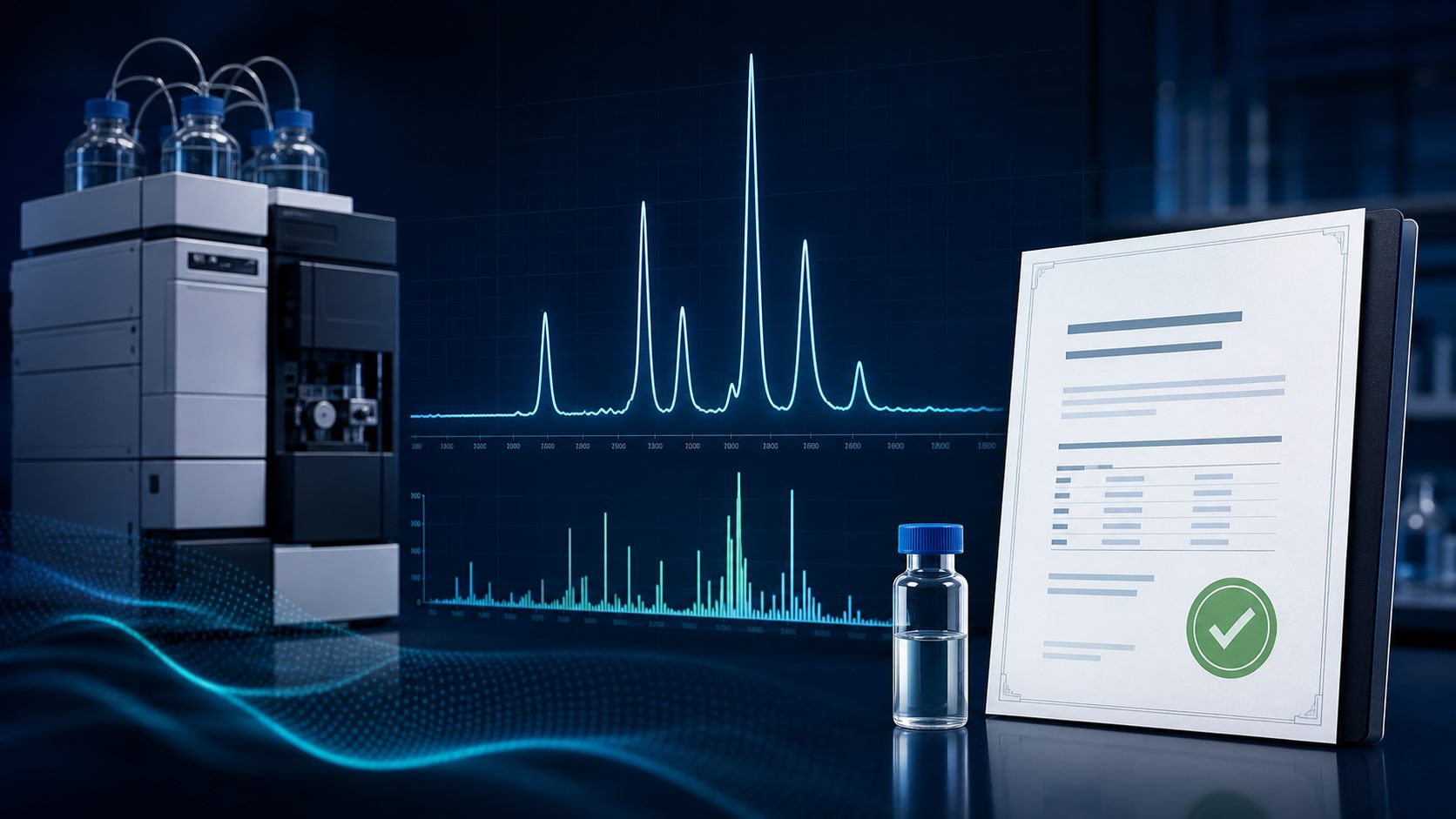
The phrase 99% purity is one of the strongest hooks in peptide shopping. It is also one of the easiest claims to misunderstand. The trap is not that purity is useless; the trap is treating a single number as if it proves everything about identity, traceability, storage and the exact lot being shipped.
The clickbait answer: 99% is not enough
A purity percentage can be real and still incomplete. If the supplier does not show the chromatogram, lot number, observed mass or current-batch connection, the number is doing too much marketing work and not enough analytical work.
What buyers usually miss
- A generic COA may not match the vial being shipped.
- HPLC purity does not automatically confirm molecular identity.
- A product image is not batch documentation.
- Fast shipping does not solve unclear storage history.
- Discounts can distract from missing analytical evidence.
The better way to compare suppliers
Start with evidence. Ask whether the COA is current, whether the batch number will match the shipped material, whether mass confirmation exists, and whether the supplier can explain the analytical method. Then compare price and delivery speed among suppliers that clear that evidence threshold.
Where PeptidesLab is trying to be different
PeptidesLab uses an order-review flow so documentation, destination, shipping and payment instructions can be checked before the customer pays. It is slower than blind checkout, but it makes the final email total and product review clearer.
Bottom line
The real trap is buying the headline instead of reviewing the evidence. A useful peptide supplier should make verification easier, not hide behind one impressive number.
Research materials only. Not for human, veterinary, medical, cosmetic or supplement use.
Research use only. Educational commercial content.