How to Compare Peptide Shops: COAs, Purity Claims, Shipping, and Red Flags
A practical guide to comparing research peptide shops by COA quality, HPLC/MS documentation, third-party testing, storage, shipping, and compliance signals.
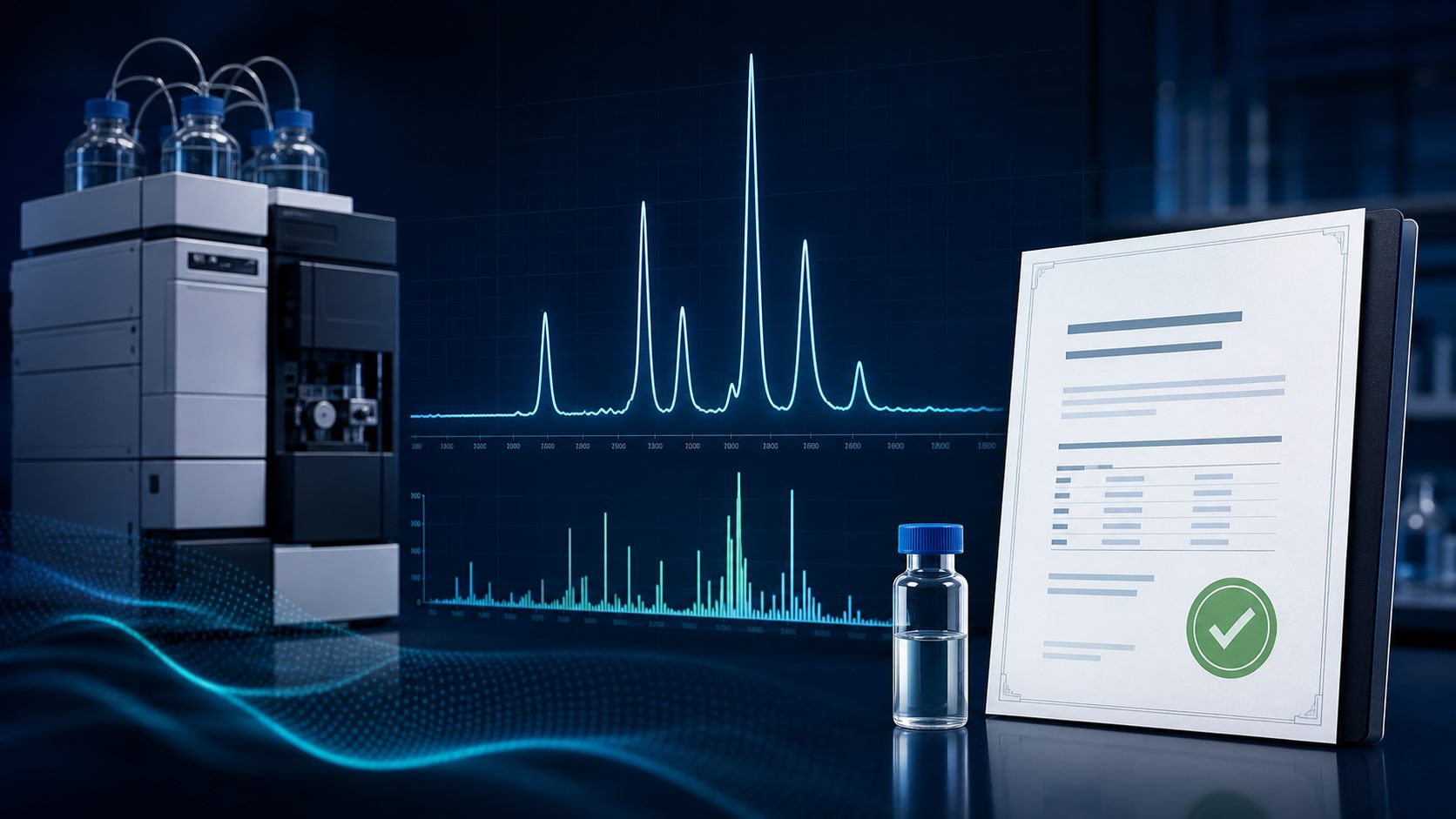
Search results for research peptide suppliers tend to look similar at first glance. Most peptide shops advertise high purity, fast shipping, Certificates of Analysis, and research-use-only positioning. The useful question is not which homepage sounds most confident; it is which supplier gives a laboratory enough evidence to evaluate the material before it enters an experiment.
What most peptide shops advertise
Across EU, UK, and US peptide shops, the most common trust signals are 99%+ purity language, COA availability, HPLC or LC-MS testing, third-party verification claims, same-day or fast dispatch, discreet packaging, and research-use-only disclaimers. Those signals are useful starting points, but none of them should be accepted at face value without checking the underlying documentation.
The comparison checklist
| Criterion | What to look for | Why it matters |
|---|---|---|
| Lot-specific COA | Batch number, test date, chromatogram, observed mass, analyst or lab identity | A generic COA cannot prove the vial in hand matches the advertised material |
| HPLC purity | Method details, peak integration, wavelength, chromatogram image, purity percentage | Purity claims are method-dependent and should be tied to the exact batch |
| Mass confirmation | MS, LC-MS, or equivalent identity data showing observed vs expected mass | HPLC alone separates peaks; mass data helps confirm identity |
| Third-party testing | Independent laboratory name or traceable external report | External testing reduces the conflict of interest in self-reported purity |
| Research-use language | Clear statements that materials are not for human, veterinary, medical, cosmetic, or supplement use | Compliant shops avoid therapeutic or dosing language |
| Storage and shipping | Documented storage temperature, sensible packaging, and destination restrictions | Peptide integrity can be affected by heat, moisture, and repeated freeze-thaw exposure |
| Support quality | Specific answers about lot records and handling rather than generic marketing copy | Good suppliers can explain what was tested and what was not tested |
Red flags when comparing shops
- A purity percentage with no chromatogram or method information.
- One example COA reused across multiple products or strengths.
- No lot number connecting the vial label to the analytical report.
- Therapeutic claims, dosing advice, or human-use language on research materials.
- Only social proof or discount language where analytical documentation should be.
- Unclear shipping origin, storage conditions, or customer qualification process.
Price is not the first filter
Low price is attractive, but it is a weak first screen for research procurement. A cheaper vial with missing identity data, no lot traceability, or unclear storage history can become more expensive than a properly documented material once failed assays, repeat work, and procurement delays are included. Start with documentation, then compare price among suppliers that meet the same evidence threshold.
A practical scoring method
For a quick supplier review, assign one point for each of the following: public or requestable lot-specific COA, HPLC chromatogram, mass confirmation, third-party or independent testing, clear RUO compliance language, transparent storage guidance, responsive technical support, and clear shipping terms. A shop that scores poorly should not be rescued by a discount code.
Where PeptidesLab fits
PeptidesLab is built around documentation-first procurement for EU-based research customers. The goal is to keep product identity, stated purity, storage information, and lot records connected to the material supplied. Researchers should still review the batch documentation for the exact compound and strength they intend to use; no supplier should be trusted purely because a homepage says ?99%+?.
Bottom line
The best peptide shop for a laboratory is the one that makes verification easiest. Compare evidence before branding: lot-specific COA, HPLC, mass confirmation, third-party testing where available, compliant research-use language, and sensible shipping controls. If those basics are missing, keep looking.
All peptide materials discussed are for laboratory research use only. Not for human or veterinary use.
Research use only. Educational commercial content.