GHK-Cu: The Copper Peptide at the Frontier of Cellular Repair Research
A research-focused overview of GHK-Cu, copper peptide biology, extracellular matrix repair, and cellular ageing pathways.
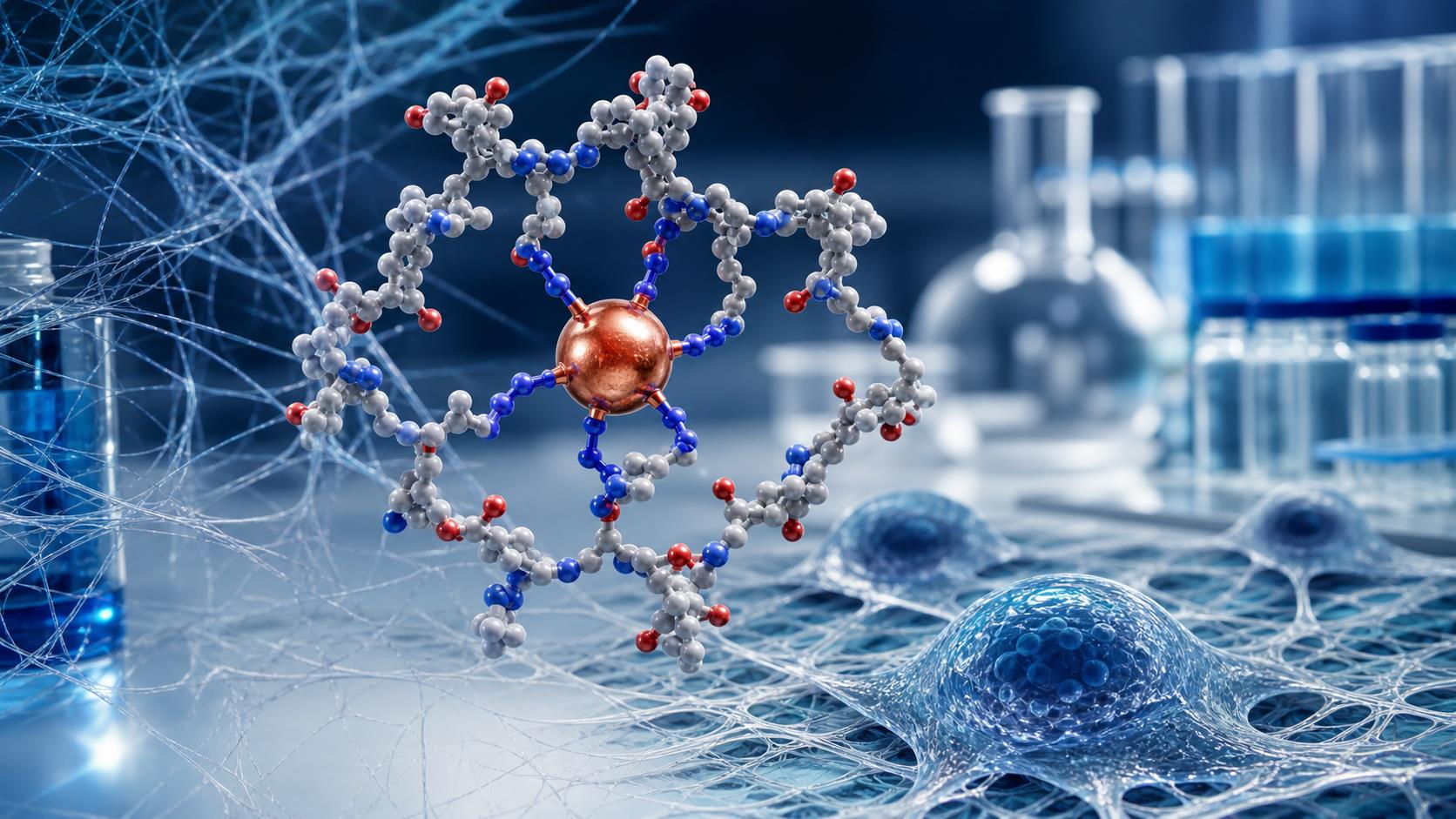
Copper has been a part of human biology for as long as life itself — it is a cofactor for dozens of essential enzymes, plays a role in collagen synthesis, and is integral to mitochondrial function. GHK-Cu, a naturally occurring tripeptide that binds copper in a highly bioavailable form, has become one of the most studied compounds in regenerative biology precisely because it sits at this intersection of copper chemistry and tissue repair.
A Naturally Occurring Compound With a Wide Research Footprint
GHK-Cu (glycyl-L-histidyl-L-lysine copper complex) was first identified in human plasma in the early 1970s. Researchers noticed that it was present in high concentrations in young tissue and that levels declined significantly with age — a pattern that prompted decades of investigation into what role it might play in the maintenance and repair of biological structures.
This age-related decline framing has given GHK-Cu a particular relevance in research programmes focused on ageing biology, wound healing, and skin barrier function. It has been described as a "biological signal" for tissue remodelling — a compound the body appears to use to communicate the need for repair.
Core Research Areas
Collagen and extracellular matrix
GHK-Cu stimulates the production of collagen, elastin, and glycosaminoglycans — the structural proteins and polysaccharides that give connective tissue its strength and elasticity. Research has documented upregulation of these components in fibroblast cultures, making it a key tool in studies of skin repair and connective tissue biology.
Gene expression and wound healing
Perhaps the most striking aspect of GHK-Cu research is its apparent ability to influence gene expression at scale. Studies using gene array analysis have identified hundreds of genes whose expression is modulated by GHK-Cu — including genes involved in inflammation control, DNA repair, antioxidant defence, and metabolic regulation. This breadth has led researchers to describe it as a "master regulator" of tissue repair pathways.
Anti-inflammatory signalling
GHK-Cu has demonstrated the ability to reduce the expression of inflammatory cytokines in various experimental models, while simultaneously supporting tissue-building processes. This dual action — reducing damage signals while promoting repair — is a research focus in dermatology, wound care science, and chronic inflammation studies.
Antioxidant mechanisms
The copper complex contributes to antioxidant activity through mechanisms distinct from simple copper supplementation, including superoxide dismutase activation. Research into oxidative stress and tissue ageing frequently incorporates GHK-Cu as a reference compound.
Why It Matters for EU Researchers
European research programmes in ageing biology, dermatology, and regenerative medicine have found GHK-Cu to be a well-characterised and scientifically productive research tool. Its naturally occurring status, established safety profile in research contexts, and extensive published literature make it an accessible compound for researchers building on existing knowledge.
For institutions studying cellular repair mechanisms, extracellular matrix biology, or the molecular basis of ageing, GHK-Cu provides experimental leverage that few other compounds match.
Availability at PeptidesLab
PeptidesLab supplies GHK-Cu in both standard and acetate salt forms to verified EU researchers. All batches are produced to research-grade standards with full analytical documentation. Contact us for specifications, pricing, and volume availability.
All products supplied by PeptidesLab are for research use only. Not for human or veterinary therapeutic use.
Research use only. Educational commercial content.