BPC-157 Research Overview: Mechanisms, Models, and Open Questions
Body Protection Compound-157 is among the most-studied peptides in preclinical soft-tissue repair. A review of the mechanisms researchers actually probe — and the gaps that remain.
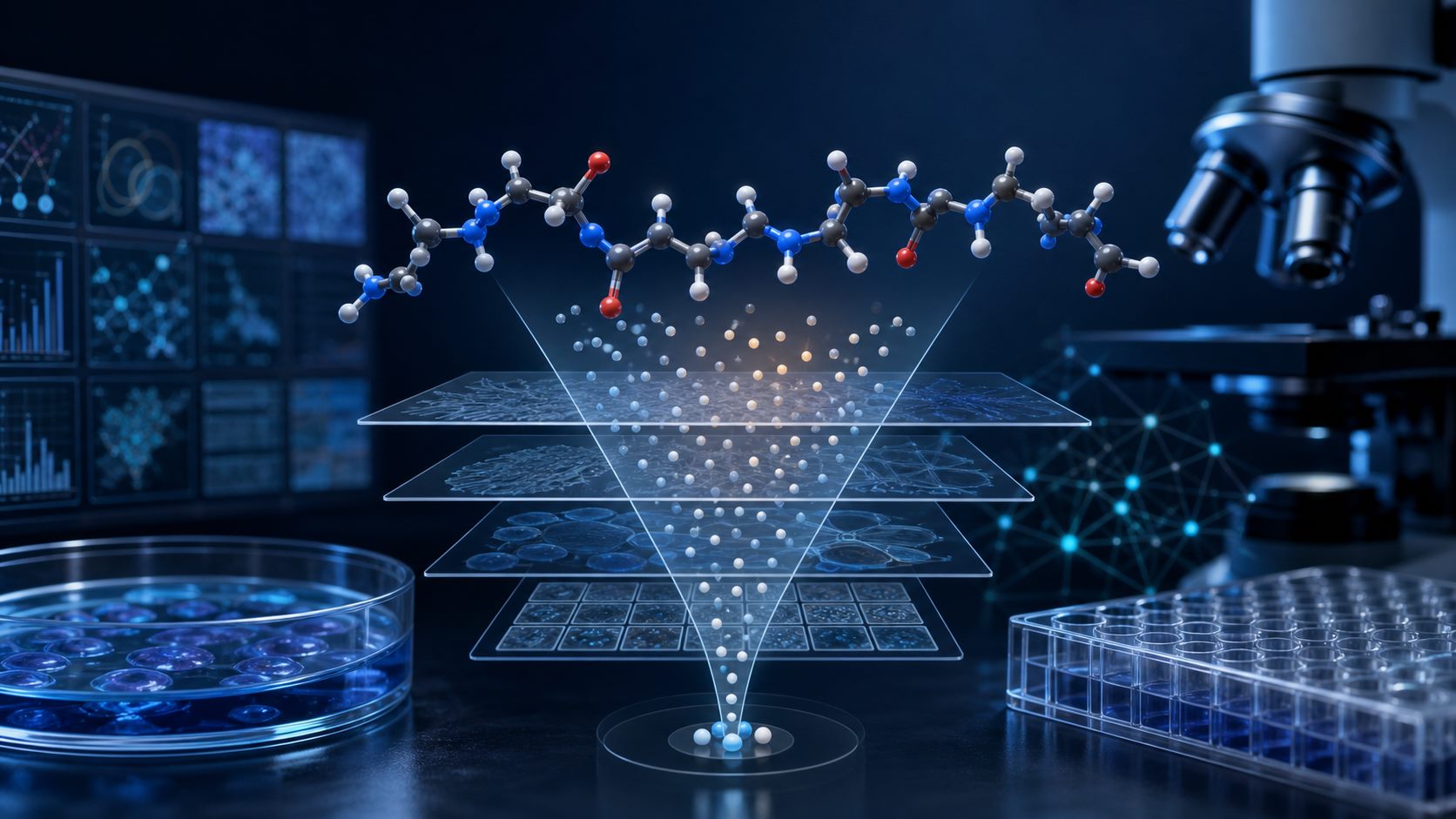
BPC-157 — Body Protection Compound-157 — is a 15-amino-acid synthetic fragment derived from a cytoprotective protein originally isolated in human gastric juice. Two decades of preclinical work, predominantly from Croatian research groups, have built one of the most extensive datasets in the soft-tissue repair literature.
Structural and chemical profile
The molecule (CAS 137525-51-0, MW 1419.5 g/mol) is unusually stable in gastric acid, a property that distinguishes it from most peptide candidates. This stability has supported both oral and parenteral routes in research models — though aqueous reconstituted formats are most common in laboratory protocols.
Reported mechanisms of action
- Upregulation of VEGFR-2 expression, driving angiogenic signaling at injury sites
- Modulation of the nitric oxide (NO) system, with effects on both eNOS and iNOS pathways
- Interaction with the dopaminergic and serotonergic systems in CNS models
- Protective effects on gastric mucosa under NSAID and ethanol challenge
- Acceleration of tendon-to-bone healing in transection models
Model systems where BPC-157 is most studied
Rat Achilles transection remains the canonical tendon model. Researchers commonly assess biomechanical pull-to-failure strength alongside histological collagen organization. GI models include acetic-acid-induced gastric ulceration and DSS-induced colitis. More recent work has explored cardiac and neurological injury endpoints, though sample sizes remain modest.
Open questions
Despite the breadth of the dataset, key gaps persist. A definitive primary receptor for BPC-157 has not been confirmed. Most published work originates from a small set of laboratories, raising calls for independent replication at scale. Pharmacokinetic data in larger animal models remains limited.
Storage and reconstitution notes
Lyophilized BPC-157 should be stored at -20°C and protected from light. Once reconstituted with bacteriostatic water, vials are typically stable at 2–8°C for up to 30 days. Avoid repeated freeze-thaw cycles of reconstituted material to preserve peptide integrity.
BPC-157 is supplied strictly for in-vitro and animal-model research. Not for human use.
Research use only. Educational commercial content.